
Retail LED Lighting • Long Island • Naples
Retail LED Lighting for Long Island & Naples Businesses
Creative Lighting helps retailers plan LED lighting around merchandise, customer experience, employee visibility, maintenance and the way each store actually operates. From Long Island showrooms and shopping centers to Naples boutiques and Southwest Florida retail properties, the goal is a lighting plan that fits the space instead of forcing every store into the same fixture package.
Commercial lighting consultation, fixture selection, retrofit planning and project support for stores, showrooms, shopping centers and multi-location retail environments.
Commercial Project Review
Discuss Your Retail Lighting Project
Tell us what kind of store, showroom or retail property you are planning to improve.
Retail Lighting Authority
Good retail lighting should support the merchandise without making the building harder to operate.
A retail project can look simple from the ceiling plan and become complicated the moment real products, shelving, mirrors, display cases, windows, fitting rooms and customer traffic enter the picture. General ambient light is only one layer. The store may also need accent lighting, display lighting, wall washing, task lighting, exterior presentation and controls that respond to operating hours.
Creative Lighting approaches retail LED projects by looking at how the property is used. A jewelry store may care deeply about color quality, sparkle and controlled accent light. A furniture showroom needs a broader field of comfortable light that still gives individual displays visual hierarchy. A grocery or specialty retailer may need practical task illumination, refrigerated-case considerations, aisle consistency and reliable maintenance access. A multi-tenant shopping center adds exterior entries, common areas, signage and property-management concerns.
The objective is not to install the brightest fixture available. It is to select and position lighting so products look intentional, employees can work comfortably, customers can move through the store naturally and maintenance does not become a constant problem.
Retail Property Types
Lighting strategies for stores, showrooms and shopping environments
Boutiques & Specialty Retail
Smaller customer-facing spaces often need a deliberate mix of ambient and accent lighting. The design should help products read clearly while avoiding a ceiling full of visual clutter.
Jewelry & Display-Case Retail
Color quality, beam control and reflections matter. Display cases and glossy finishes can look dramatically different under the wrong source or distribution.
Furniture & Home Showrooms
Large displays need comfortable ambient light plus localized emphasis. A strong plan helps prevent bright islands surrounded by dull aisles.
Shopping Centers & Strip Centers
Tenant spaces, exterior entries, walkways, common areas and property lighting should be evaluated as related systems rather than separate afterthoughts.
Multi-Location Retail
Creative Lighting can help develop repeatable fixture and performance standards while allowing each site to adapt to its own ceiling heights, finishes and operating needs.
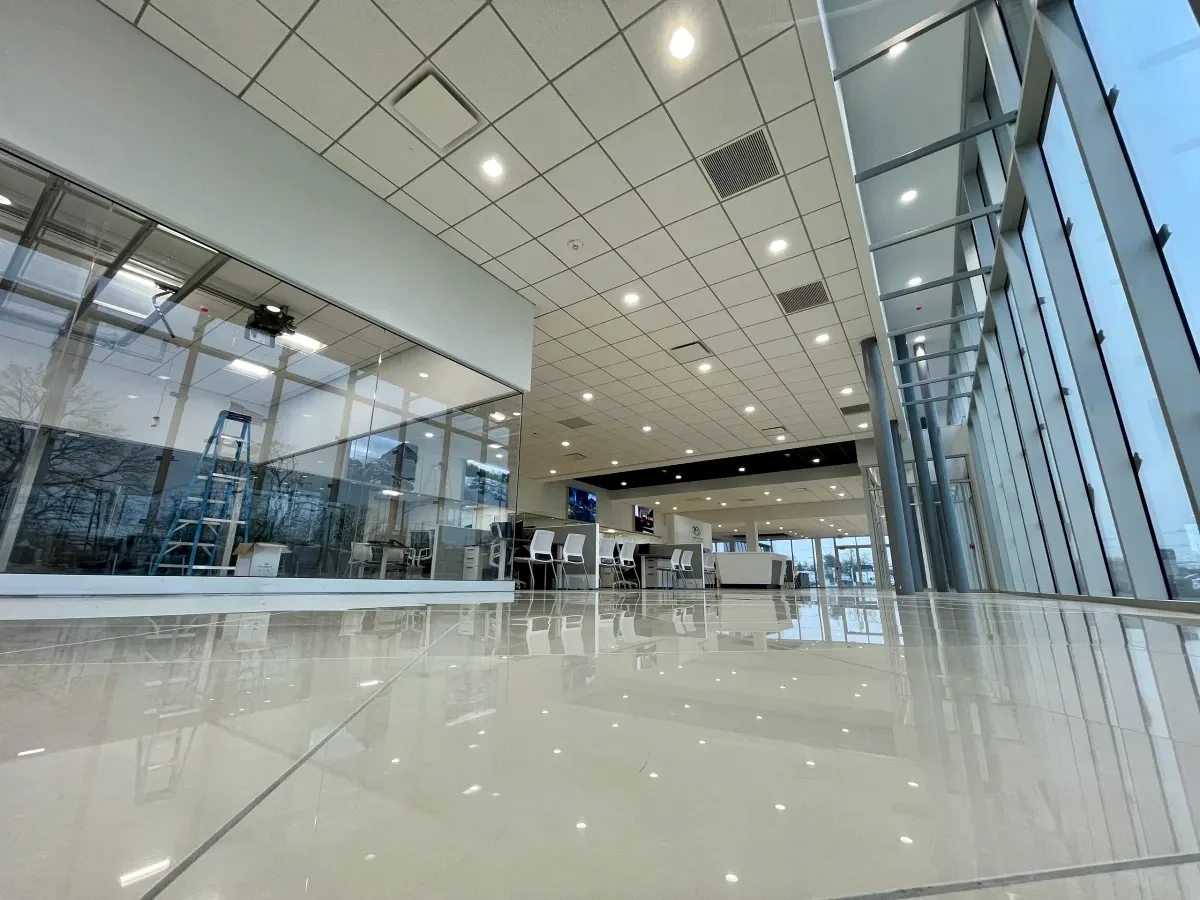
Showrooms & Customer Experience Spaces
Vehicle, furniture, appliance, flooring and other showroom environments benefit from lighting that supports product presentation, color appearance and comfortable browsing.
Merchandise Presentation
High-CRI lighting, color temperature and beam control matter more when customers are judging what they see.
Retail lighting is not only about foot-candles. Customers are evaluating color, finish, texture and detail. That makes color rendering and source quality especially important in apparel, cosmetics, furniture, jewelry, automotive-adjacent retail and other product-driven environments.
High-CRI sources can help products and finishes appear more natural, but CRI should not be treated as the only specification that matters. Distribution, beam angle, glare, vertical illumination, source consistency and the surrounding material palette all influence what the customer actually sees.
Color temperature also changes the character of a store. Warmer light may support hospitality-inspired or luxury environments, while neutral or cooler tones can work in clean, contemporary and task-heavy spaces. The right answer depends on merchandise, finishes, daylight, brand standards and customer expectations.
Questions worth resolving before fixtures are ordered
- Which products or displays need visual emphasis?
- Where do glossy surfaces create reflections or glare?
- How much vertical light is needed on shelving and walls?
- Are existing track, recessed or linear systems reusable?
- Should color temperature remain consistent across the store?
- Do fitting rooms need a different strategy from sales floors?
- How will dimming, controls or daylight affect the scene during operating hours?
Storefronts, Windows & Exterior Entries
The retail experience starts before the customer enters the store.
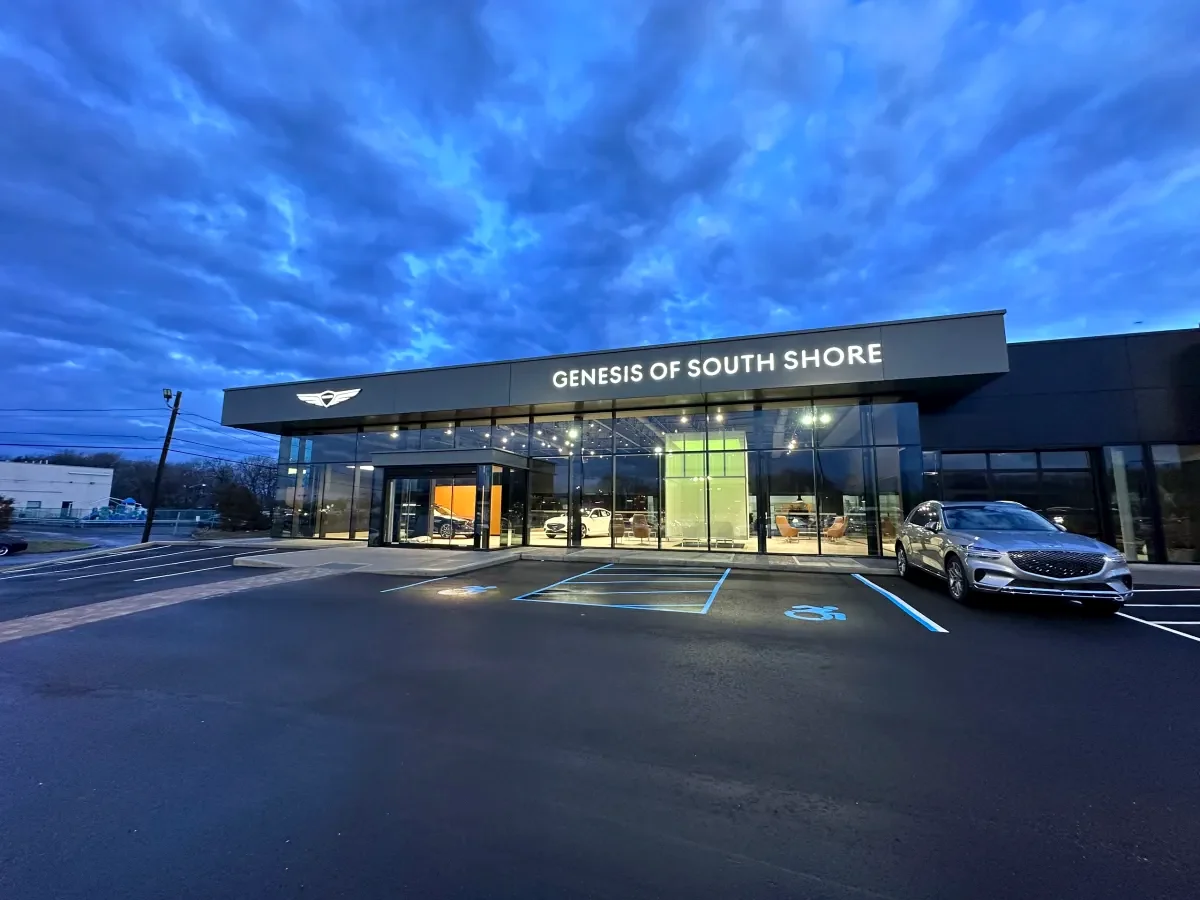
Exterior and storefront lighting can help define entrances, improve nighttime visibility and connect the interior presentation to the property outside. Window displays may require more directional light than the sales floor. Exterior entries may need durable fixtures, appropriate controls and careful placement so light supports visibility without creating harsh glare.
For shopping centers and multi-tenant properties, exterior planning can also intersect with parking areas, pedestrian routes, signage and common-area lighting. Those components should be coordinated so the customer does not move from a well-lit lot into a dim walkway and then into an over-bright storefront.
For broader exterior planning, review Creative Lighting’s Parking Lot LED Lighting guidance.
Inside the Store
Different zones need different lighting jobs.
Sales Floors
Ambient light should make navigation and product evaluation comfortable without flattening the visual hierarchy. Accent and display lighting can then be used where emphasis is needed.
Fitting Rooms
Lighting around mirrors and faces should be selected carefully. Poor placement can create unflattering shadows, glare or inconsistent color appearance compared with the sales floor.
Checkout & POS
Employees need practical task visibility while customers should still experience the checkout zone as part of the retail environment rather than a back-office workstation.
Stockrooms
Back-of-house lighting should prioritize visibility, maintenance, operating hours and controls. Decorative decisions that matter on the sales floor may be irrelevant here.
Loading & Service Areas
These spaces may need durable, practical illumination that supports receiving, inventory movement and employee access without overcomplicating the system.
Architectural Features
Columns, walls, shelving, soffits and branded display elements can benefit from integrated or directional light when it supports the store design rather than competing with it.
Retrofit Strategy
Sometimes the right project is a fixture swap. Sometimes the existing layout deserves to be reconsidered.
Many retail properties still operate with older fluorescent, HID, halogen or early-generation LED systems. A retrofit can reduce unnecessary energy use and maintenance, but the project should not assume the old layout was ideal simply because it already exists.
If the store has uneven aisles, dark walls, glare on products, poor fitting-room lighting or a ceiling full of mismatched fixture families, a one-for-one replacement may preserve those problems. Creative Lighting can help compare a straightforward retrofit with a more deliberate redesign so the scope fits the actual objective.
Long Island businesses evaluating upgrades may also have access to current commercial efficiency programs. PSEG Long Island publishes current commercial rebate information and notes that eligibility, pre-approval, inspections and program requirements can apply. Creative Lighting can help customers understand available program information, but rebate eligibility should always be confirmed against the current program rules.
Explore the broader Commercial LED Lighting Retrofit process for more detail.
Controls worth considering
- Scheduling and time-based control
- Occupancy or vacancy sensing in appropriate areas
- Dimming for customer-facing zones
- Daylight-responsive control where applicable
- Separate control of display, ambient and back-of-house lighting
- Control strategies that match store hours and cleaning/stocking periods
Florida’s 2026 Energy Conservation Code includes updated commercial lighting-control provisions and more stringent lighting power allowances, which is one reason Florida projects should be reviewed against current requirements rather than relying on old assumptions.
Commercial Design Support
Photometric information and fixture selection should answer real site questions.
A lighting plan may include fixture families, output, optics, beam spreads, spacing, mounting conditions, controls and photometric information. The useful question is not whether the plan contains technical-looking numbers. It is whether those numbers help the owner, contractor or project team understand how the proposed system will perform in the actual property.
Retail projects can benefit from photometric and layout guidance when aisle geometry, high ceilings, display walls, storefront glass, existing track or unusual architectural conditions make the outcome difficult to judge by fixture specifications alone. Creative Lighting can coordinate product and design information with owners, electricians, contractors, architects and facility teams so the selected equipment makes sense before the order is placed.
Two Core Markets
Retail LED lighting support for Long Island and Naples / Southwest Florida
Long Island Retail Lighting
Creative Lighting is based in Plainview and supports commercial projects throughout Nassau County and Suffolk County. Long Island retail environments range from neighborhood storefronts and strip centers to automotive showrooms, specialty stores, shopping centers and larger multi-location operations.
Existing properties often present a mix of legacy fluorescent systems, older track lighting, early LED retrofits and inconsistent fixture families accumulated over multiple renovations. A useful upgrade starts by separating what still works from what should be replaced or redesigned.
For eligible projects, current PSEG Long Island commercial efficiency programs may offer rebate opportunities. Program rules change, so any rebate discussion should be verified against the current PSEG Long Island requirements before a customer relies on it.
Long Island project line: 516-741-6333
Naples & Southwest Florida Retail Lighting
Naples and Southwest Florida have a strong mix of boutiques, luxury retail, showrooms, shopping centers, mixed-use properties and hospitality-adjacent businesses. Those environments often place a premium on presentation, architectural detail, customer comfort and polished exterior appearance.
Retail lighting in this market should still be practical. High-CRI display lighting, layered accent light, controls, efficient ambient lighting and exterior visibility all have to work inside the operating requirements of the property. Projects should also be reviewed against current Florida energy-code and lighting-control requirements where applicable.
Creative Lighting supports Florida commercial opportunities without implying a separate Florida office. The company’s Plainview base supports projects in Florida and nationwide.
Naples / toll-free project line: 888-614-1698
Why Creative Lighting
Commercial lighting experience without the one-size-fits-all pitch
Creative Lighting’s roots go back to 1965. The company’s commercial work spans fixture selection, design guidance, retrofit planning and project support across multiple types of properties. That history matters because lighting technology changes quickly, but the underlying responsibility does not: the recommended solution should fit the customer’s building and use case.
Retail is a good example. The right system might include efficient ambient lighting, high-quality track or accent sources, specialized display lighting, dimming, controls and separate back-of-house solutions. Another store may need a much simpler retrofit. The project should be scoped around the actual environment rather than a predetermined package.
A practical project process
- Review the space. Identify customer areas, displays, operating hours, ceilings, existing fixtures and problem zones.
- Define priorities. Presentation, visibility, maintenance, efficiency, controls, budget and schedule.
- Compare options. Fixture families, output, optics, color quality, controls and retrofit paths.
- Coordinate details. Share relevant product and design information with the project team.
- Refine before ordering. Adjust the plan when real field conditions or project decisions require it.
Related Commercial Services
Build the retail project into the larger commercial lighting system
Retail LED Lighting FAQs
Questions commercial retail buyers commonly ask
What type of LED lighting is best for retail stores?
There is no single fixture type that is best for every store. Retail spaces often combine ambient lighting with track, accent, display, recessed, linear or architectural lighting. The right mix depends on ceiling height, merchandise, shelving, customer flow, finishes, daylight, brand standards and the tasks employees perform.
Why does CRI matter in retail lighting?
Retail customers are judging color, texture and finish. Higher color-rendering performance can help products and materials appear more natural, but CRI should be considered together with color temperature, beam control, glare, vertical illumination and the surrounding finishes.
Can Creative Lighting retrofit an existing retail store?
Yes. Creative Lighting can help evaluate existing fluorescent, HID, halogen or older LED systems and compare a straightforward retrofit with a more complete redesign. The goal is to avoid preserving layout problems simply because existing fixtures happen to be in those locations.
Do you work with shopping centers and multi-tenant retail properties?
Yes. Retail centers can involve tenant spaces, common areas, exterior entries, walkways, signage and parking-related lighting. The scope should be defined around the owner’s or property manager’s responsibilities and the areas that actually need improvement.
Can a lighting retrofit be completed in phases?
Often, yes. Phasing can make sense for occupied stores, multi-location programs or properties that need to coordinate work around business hours. The project team should confirm electrical conditions, fixture availability and sequencing before assuming a phased plan will be seamless.
Do you provide lighting layouts or photometric guidance?
Creative Lighting can provide design and product-selection guidance, including photometric information where it is useful for the project. This can help evaluate distribution, spacing, illumination levels and other performance questions before equipment is ordered.
Do you serve Naples and Southwest Florida?
Yes. Creative Lighting supports commercial lighting opportunities in Naples and Southwest Florida while maintaining its established Plainview, New York base. The Florida service area does not imply a separate Florida office.
Do you serve Nassau and Suffolk County?
Yes. Creative Lighting is based in Plainview and supports commercial projects throughout Long Island, including Nassau County and Suffolk County.
Can LED lighting reduce lighting maintenance?
LED systems can reduce relamping frequency compared with many older lamp-based systems, but maintenance results depend on fixture quality, operating hours, environmental conditions, controls and accessibility. A good project considers serviceability as well as rated life.
What lighting works well for showrooms?
Showrooms often benefit from a balanced ambient layer with controlled accent lighting so products have visual hierarchy without excessive contrast or glare. Color quality, reflections, vertical surfaces and product finishes should all influence fixture and beam selection.
Can dimming and lighting controls be incorporated?
Yes, when the selected fixtures and controls are compatible. Retail properties may benefit from scheduling, dimming, occupancy sensing, daylight-responsive strategies or separate control of sales-floor, display and back-of-house lighting. Applicable code requirements should also be reviewed.
Can Creative Lighting coordinate with architects, electricians and contractors?
Yes. Product and design information can be coordinated with the owner, architect, electrician, contractor, facility manager or other project professionals so the selected lighting plan survives the move from concept to installation.
Start With the Store, Not the Catalog
Planning a retail LED lighting project on Long Island or in Naples?
Discuss your sales floor, showroom, shopping center, storefront, retrofit or multi-location program with Creative Lighting. We can help review the space, compare appropriate lighting options and determine whether the project calls for a straightforward retrofit or a deeper redesign.
Authority Resources
Current commercial lighting and energy references
U.S. Department of Energy – LED Basics · ENERGY STAR – Lighting · PSEG Long Island – Commercial Rebates · Florida Building Commission