Let the inventory stand out.
Review frontage, vehicle rows, customer walkways, and delivery areas together. Better distribution can address dark gaps and distracting bright spots while keeping attention on the vehicles.

Long Island, NY · Naples & Southwest Florida
Give your inventory the attention it deserves. Plan lighting for your display lot, showroom, and service bays around the way your dealership actually works.
Creative Lighting provides lighting sales, design guidance, and project support, helping you evaluate upgrades before equipment is ordered.
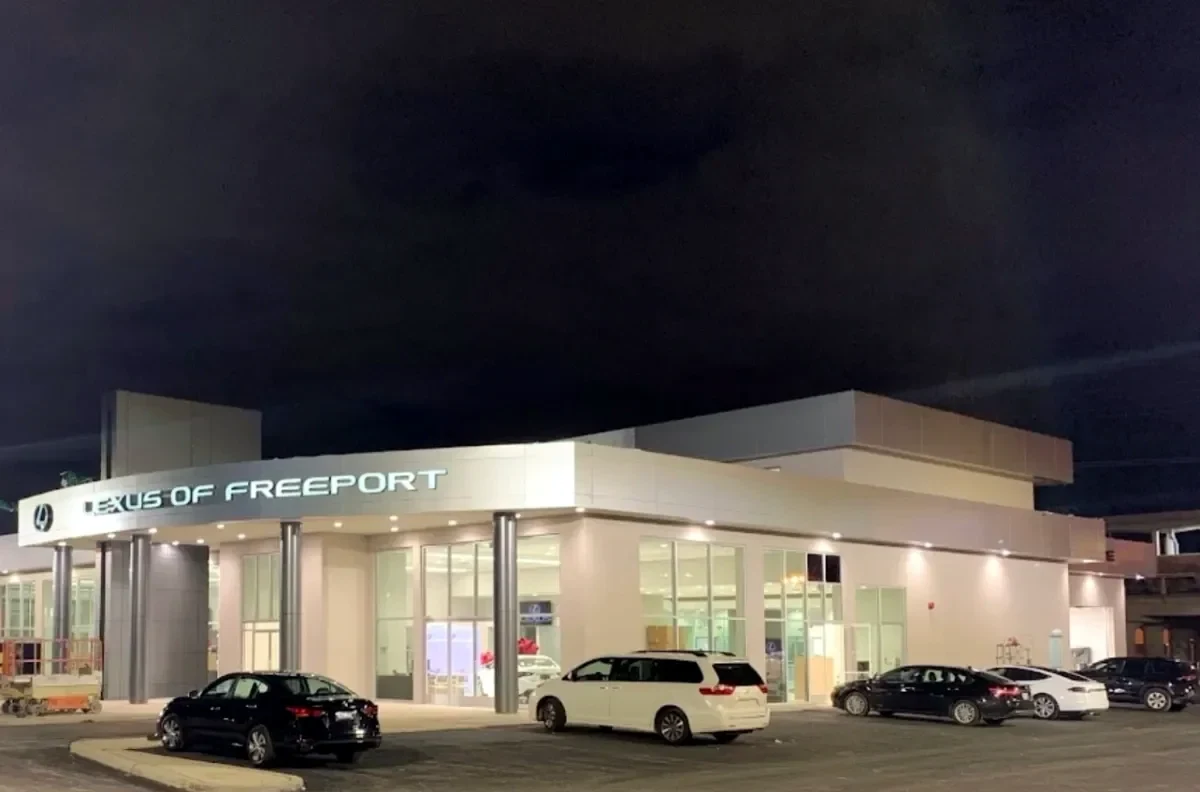
Pictured: Lexus of Freeport exterior, from Creative Lighting’s project imagery.
A better view of your dealership
A dealership has several lighting jobs to solve. Vehicles should be easy to view after dark, finishes should look natural in the showroom, and technicians need useful light around the work. An upgrade should connect those needs without treating every area as the same space.
Review frontage, vehicle rows, customer walkways, and delivery areas together. Better distribution can address dark gaps and distracting bright spots while keeping attention on the vehicles.
Compare color quality, fixture placement, and reflections across paint, glass, and trim. The right approach supports a welcoming showroom without washing out the character of the space.
Evaluate service bays, parts counters, and support rooms by task. Plan controls and maintenance access around your team’s working hours and the equipment already in place.
Exterior lighting
Buying a brighter pole fixture does not necessarily correct uneven coverage. Existing pole spacing, mounting height, vehicle placement, neighboring properties, and the shape of the lot all influence where light lands. Start with a plan showing the display rows, customer entrances, circulation routes, and areas that remain active after closing.
Frontline inventory may need a different approach from employee parking or a rear storage area. Review the visual balance from the road as well as conditions at walking level. A fixture that looks impressive from one angle can create distracting glare from another.
Optics, shielding, output, and aiming should be considered together. A lighting-layout review can compare proposed distributions and identify where spill may reach adjacent properties. Existing poles also need assessment by the responsible qualified professionals before new equipment is selected; appearance alone does not confirm their condition or suitability.
For projects centered on general exterior coverage, see our parking lot LED lighting guidance. The dealership plan adds the needs of vehicle presentation, customer movement, and separate operating zones.
Showrooms and service bays
Showroom lighting needs to account for reflective surfaces and changing daylight. Look at paint samples and actual vehicles under proposed products where practical. Color rendering, color temperature, beam spread, and placement affect the appearance of finishes; a specification on its own cannot show the complete result.
Discuss brand requirements, display rotations, desk positions, and customer seating before finalizing the scheme. Layering general illumination with appropriate display lighting can create visual emphasis while keeping sales conversations comfortable. Review reflections in windscreens and glossy surfaces from the customer’s normal viewing positions.
Service bays introduce lifts, open hoods, tools, and equipment that can interrupt overhead light. Review the working positions and tasks in each bay rather than relying only on a reading at the center of the floor. General lighting and local task lighting may need to complement each other.
Parts storage, inspection areas, detailing spaces, and customer service desks can require different distributions and controls. Include cleaning conditions, ambient temperatures, mounting access, and fixture suitability in the discussion. Your qualified electrical contractor should confirm electrical conditions and installation requirements for the final equipment.
Automotive environments
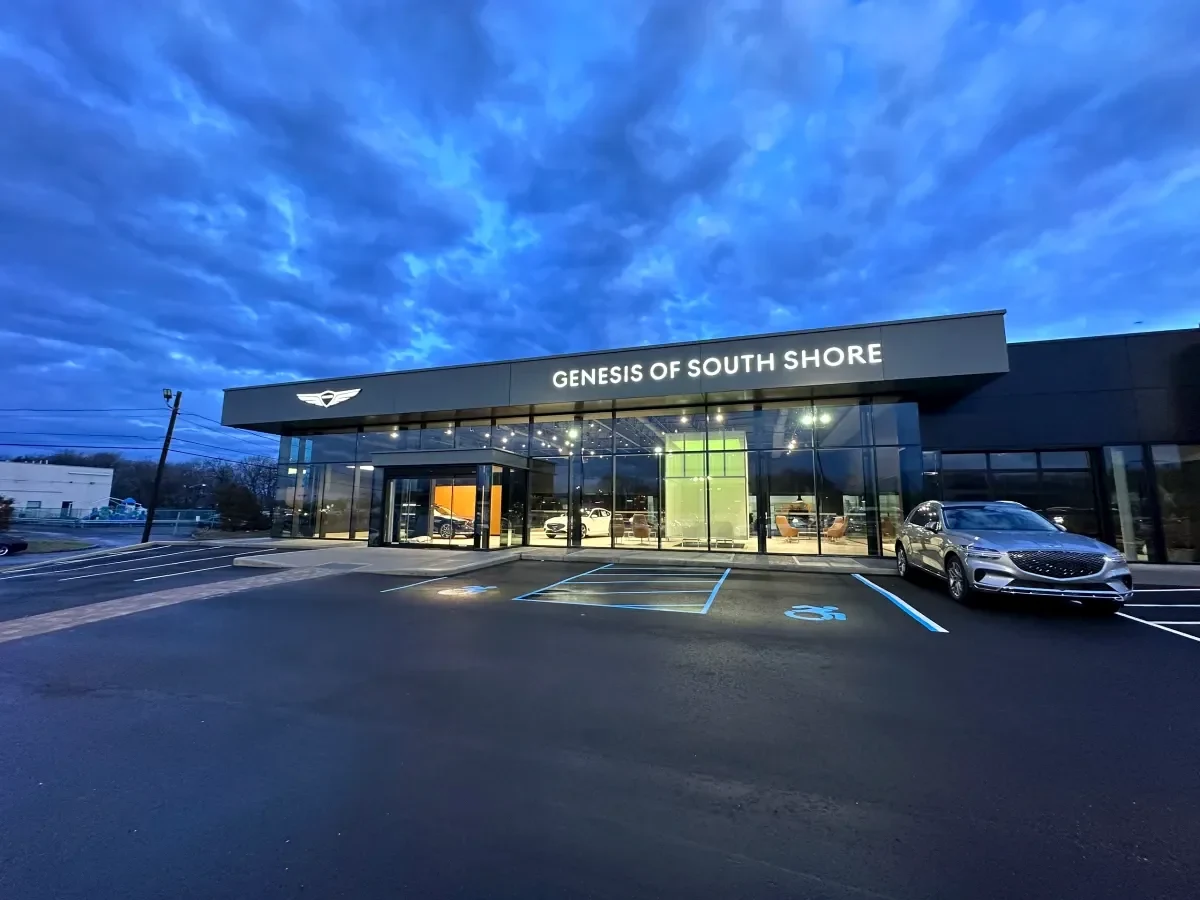
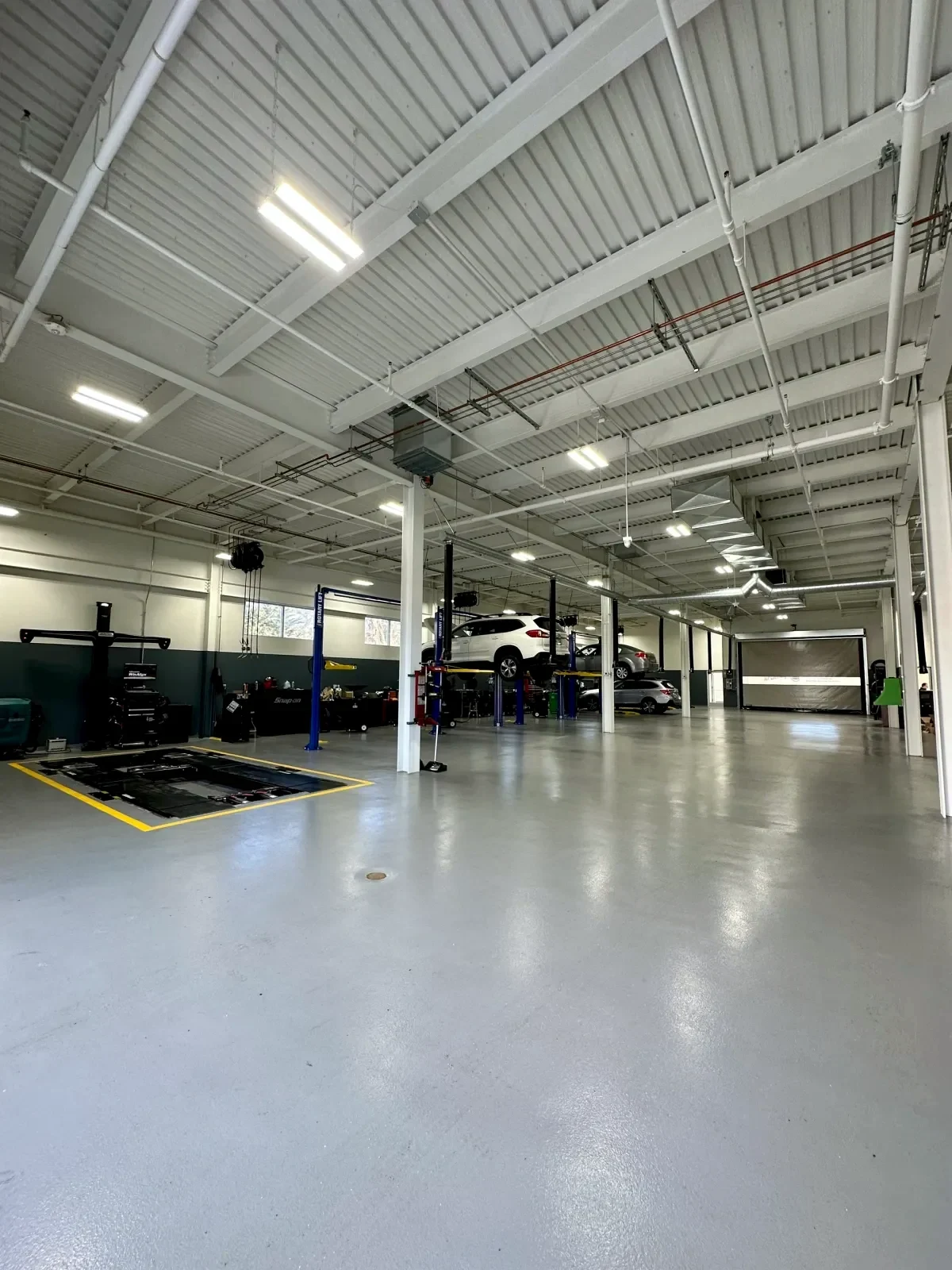
These environments illustrate why an automotive lighting brief should include both public-facing spaces and working areas. Bring photographs of your own property, existing fixtures, and the conditions you want to improve. They give the consultation a useful starting point before detailed product or layout decisions are made. See retail and showroom LED lighting
Upgrade choices
Aging HID or fluorescent systems can be reviewed for complete fixture replacement or compatible retrofit options. Existing housings, wiring, mounting arrangements, control compatibility, and product documentation all matter. A lower initial equipment price can be less attractive if it leaves difficult maintenance or an unsuitable distribution unresolved.
Our LED retrofit planning page explains the broader assessment. For a dealership, also consider whether changes to inventory rows, showroom layouts, or bay use have made the original lighting arrangement less effective.
Compare total project cost using actual fixture quantities, operating hours, electricity rates, controls, and installation scope. Separate daytime showroom use from overnight exterior operation. A documented baseline gives the team a more useful comparison than a universal savings percentage.
Discuss lift access, parked vehicles, working bays, and parts availability when considering maintenance. Scheduling, dimming, and compatible sensors can help tailor operation to each zone. Commission controls with the people using the building so reduced output does not interfere with cleaning, late collections, or service work.
Plan the investment
Ask for a clear equipment schedule and a description of the areas included. A useful comparison distinguishes fixtures, controls, mounting accessories, installation, and any additional assessment work. Confirm warranty terms and the process for resolving product issues before purchasing. If quotes cover different quantities or different areas, compare those differences before focusing on the total.
For a dealership group, identify which decisions should be consistent across properties and which need a site-specific review. Showroom appearance may follow a common brand direction, while lot geometry and service-bay conditions vary considerably. Document the assumptions behind each location so future upgrades can build on the plan instead of starting over.
From questions to a plan
Provide your town, photographs, fixture information, operating hours, and main concerns. Identify whether the request covers the lot, showroom, service department, or all three.
Discuss layout, equipment condition, visual comfort, controls, and project constraints. Identify any measurements, drawings, or contractor checks needed before recommendations can be finalized.
Evaluate appropriate products and a proposed lighting approach. Consider distribution, color quality, maintenance, and realistic operating-cost assumptions alongside the equipment budget.
Confirm responsibilities for design support, purchasing, installation, permits, and commissioning. Agree on phasing with your project team so the work can fit the dealership’s operations.
For a project involving multiple spaces or a revised layout, explore our commercial lighting design guidance. Creative Lighting’s role is lighting guidance, product selection, and project support; installation arrangements are confirmed for the specific project.
Two regions · one project conversation
Long Island, New York
Based in Plainview, Creative Lighting supports Long Island commercial lighting projects. Dealership teams in communities such as Freeport and the wider Nassau and Suffolk area can discuss exterior displays, showroom upgrades, and service facilities in one consultation.
Potential PSEG rebate eligibility is reviewed as part of the consultation for applicable Long Island projects. Our PSEG Long Island rebate guidance is a starting point; current program rules and project eligibility must be confirmed. No standard LED rebate, approval, or fixed savings should be assumed.
Naples & Southwest Florida
Creative Lighting supports Florida project inquiries. For a dealership in Naples, Bonita Springs, Estero, or Fort Myers, share the address and scope so the team can confirm available project support and the responsibilities of local professionals.
Discuss exterior exposure, product suitability, mounting conditions, and local requirements with the project team. Utility territory and incentive options must be reviewed separately from New York. PSEG Long Island guidance does not apply to Florida properties, and Florida support does not imply a separate local office or installation crew.
Your questions
Clear answers before you commit to equipment or an installation schedule.
Yes. Start with the area that needs attention, whether that is frontage, display rows, or customer parking. Include existing poles, fixture information, and photographs. The consultation can also identify where a separate showroom or service-bay review would be useful.
That depends on their condition and suitability for the proposed equipment. Pole height, mounting arrangement, structural considerations, and electrical conditions need review by the responsible qualified professionals. Reusing poles should be a considered decision, not an assumption based on photographs.
Begin with the task and layout. Vehicle presentation, walking routes, and technician work require different considerations. The design review should address distribution, visual comfort, and relevant project requirements rather than prescribing the same output everywhere.
Appropriate optics, shielding, placement, and output can help manage glare and spill. Simply increasing brightness can make those concerns worse. Review neighboring properties and driver sightlines, and assess a proposed layout before choosing fixtures.
Review color rendering and color temperature alongside the actual space, daylight, and vehicle finishes. A sample comparison can be useful. Consistent specifications help, but placement and reflected light also influence how customers see the vehicle.
Discuss phasing with the project team and electrical contractor. The lot, showroom, and service bays may have different working windows. A phased approach should still use a coherent plan so product choices and control arrangements remain compatible.
Creative Lighting provides lighting sales, design guidance, and project support. Confirm installation responsibilities, contractor arrangements, permits, and commissioning for your specific project before scheduling work. The consultation establishes what support is needed and who will provide it.
Potential eligibility is reviewed for applicable Long Island projects using current official program guidance. Equipment choice alone does not establish eligibility. Do not include an incentive in the project budget as guaranteed until the program confirms the applicable requirements and approval.
Yes, you can submit a Naples or Southwest Florida project inquiry. Include your town and scope so available support can be confirmed. Local installation arrangements and utility incentives are reviewed for the property; New York program terms do not transfer to Florida.
Bring photographs, a site plan if available, fixture quantities or labels, typical operating hours, and your main concerns. Explain which areas stay active after closing and any planned layout changes. This helps identify the information needed for a useful recommendation.
Start with your property
Tell us what your customers and team need to see more clearly. Request your complimentary commercial lighting audit and discuss a practical next step.